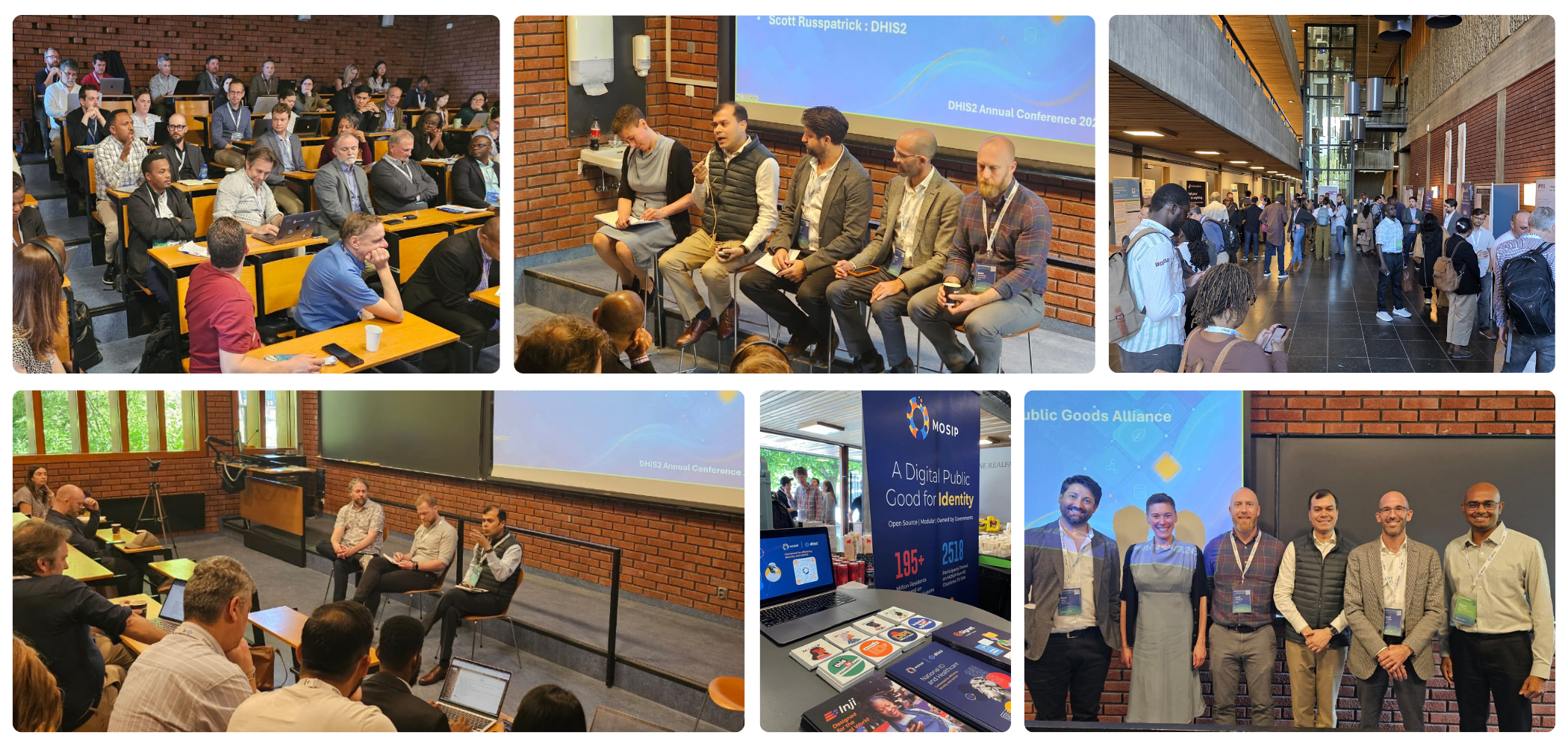
MOSIP participated in the DHIS2 Annual Conference 2026, held at the University of Oslo, Norway, from 15–18 June. Organised by the DHIS2 community, the annual event brought together digital public infrastructure (DPI) practitioners, public health leaders, and Digital Public Goods (DPGs) from around the world to exchange experiences, explore emerging approaches, and strengthen collaborations across the ecosystem.
MOSIP's participation began at the DHIS2 Tech Bazaar, where organisations from across the DPG ecosystem came together to showcase solutions, share implementation experiences, and explore opportunities for collaboration. Through these discussions, MOSIP engaged with fellow DPGs and technology partners on advancing interoperability and strengthening country-owned DPI.
During the panel discussion, "Sustaining Digital Public Goods: From Projects to Shared Infrastructure," MOSIP's Rohit Ranjan Rai joined representatives from DHIS2, OpenCRVS, OpenFN, and the Digital Public Goods Alliance to examine how DPGs can remain sustainable beyond traditional donor-funded models.
The conversation highlighted that the sustainability challenge goes beyond financing. Long-term success depends on strong country ownership, government investment, partner contributions, capacity building, and shared responsibility across stakeholders. The panellists broke down how DPGs can evolve from standalone projects into shared digital infrastructure that countries can adapt, govern, and maintain over time.
Drawing on MOSIP's experience supporting national ID systems across the globe, Rohit reflected on the role of the private sector in building competitive service ecosystems around public digital infrastructure. He highlighted how open standards, modular architecture, and a broad partner network enable countries to engage multiple implementation partners while retaining ownership of their systems, data, and technology choices.
Another conference highlight was a session on "DPGs in Practice: Integrating Open Digital Solutions for Country Use Cases”, Pramod Amarakoon from DHIS2 demonstrated the integration of MOSIP and DHIS2 to support an antenatal care use case in Sri Lanka.
The demonstration showcased how digital ID and health information systems can work together to streamline service delivery, strengthen continuity of care, and improve access to health services while ensuring that sensitive health information remains within the appropriate health systems.
The panel discussion that followed brought together perspectives from DHIS2, Norad, and MOSIP on the opportunities and challenges of integrating multiple DPGs to support real-world public service delivery. Speakers emphasised that interoperability alone is not enough; successful integration also requires trusted digital ecosystems built through policies, governance structures, and implementation approaches that place residents rights and needs at the centre.
---
Forums like the DHIS2 Annual Conference play a vital role in advancing collaboration across communities of practice. Thank you to the DHIS2 community for convening these important conversations. We look forward to continuing to learn, collaborate, and build stronger, more connected digital ecosystems together!