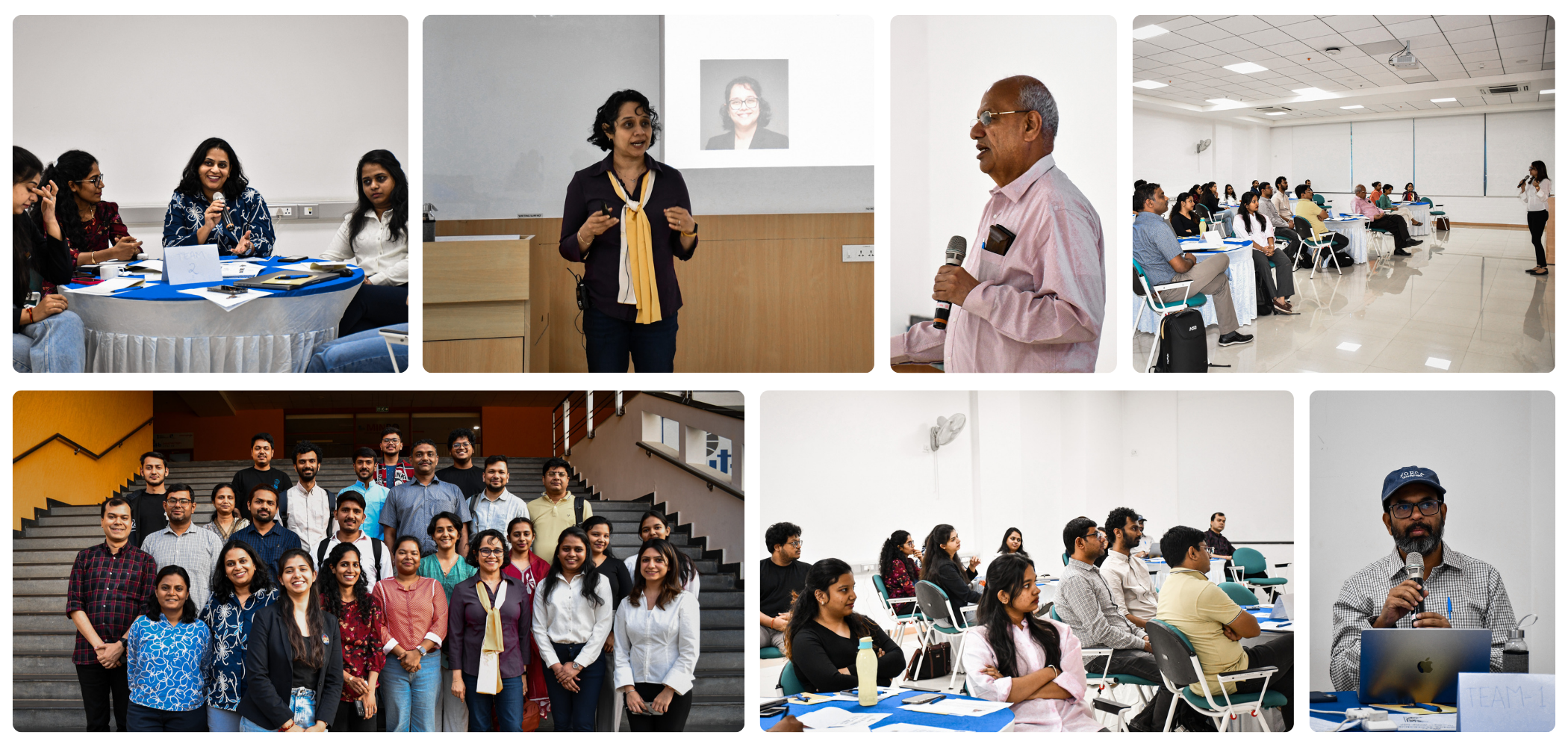
Anita Sarma, Professor of Computer Science at Oregon State University (OSU), conducted a workshop on Inclusivity in Software at IIIT-Bangalore this week. The session brought together participants from MOSIP, Centre for Open Societal Systems (COSS), OpenG2P, eGov, and other partner organisations working on Digital Public Goods (DPGs).
As Digital Public Infrastructure (DPI) systems expand to serve people across different regions and socio-economic backgrounds, it becomes increasingly important to ensure that the software behind them works effectively for all users. Systems built at this scale must account for differences in digital literacy, connectivity, access to devices, and levels of confidence when interacting with technology. Even seemingly minor design choices – such as how workflows are structured, how authentication is handled, or how errors are communicated – can unintentionally create barriers if these realities are not considered.
MOSIP has previously engaged with OSU researchers on the GenderMag method to better understand how inclusivity considerations can be integrated into software design. Building on this engagement, the workshop introduced participants to the SESMag (Socio-Economic Magnifier) evaluation framework, a method designed to help teams identify potential barriers different groups may encounter when interacting with software systems.
Also developed at OSU, SESMag provides a structured approach for engineering and product teams to systematically surface inclusivity gaps in software design. Rather than functioning as a compliance checklist, the framework uses research-based personas and scenario-driven evaluation to explore how users with different problem-solving styles, risk tolerance, and socio-economic constraints may experience a system.
Through interactive discussions and exercises, participants worked in teams to evaluate product scenarios and reflect on how assumptions embedded in software design can shape user experience. The process helped teams uncover hidden design assumptions and recognise areas where inclusivity gaps may emerge in real-world deployments.
A key theme of the session was that inclusivity is not about creating separate systems for different users, but about designing core systems that accommodate diversity from the outset. Participants explored practical strategies to integrate inclusive thinking into solution design, development, and delivery processes – treating inclusivity challenges much like identifying and resolving software “bugs.”
Prof. Sarma also shared insights into the fairUX AI tool, developed by OSU and MOSIP, which is designed to evaluate user interface elements and highlight potential inclusivity barriers. As part of the session, participants engaged in a hands-on exercise to create reports comparing their manual analysis of interface issues with fixes suggested by the AI tool, reflecting on how such technologies can support more inclusive design practices.
The workshop also emphasised the importance of interdisciplinary collaboration between researchers, developers, and policy practitioners working on DPGs. Prof. Sarma noted inclusivity as one of MOSIP’s core tangents and reflected on the team’s continued efforts to be cognisant of biases when designing software. She concluded by expressing optimism about the future development of GenderMag and SESMag using AI, as well as building a community to grow the field.
“It’s important for us as developers to be part of conversations like this,” shared one participant. “These workshops help us recognise the assumptions we can sometimes make while designing. And prioritising inclusivity throughout the development process will help ensure that the technology we build is closer to what we want to achieve.”
By creating space for reflection and knowledge exchange, the workshop strengthened the shared commitment among partner organisations to design digital systems that remain accessible, equitable, and responsive to the diverse populations these technologies are intended to serve.