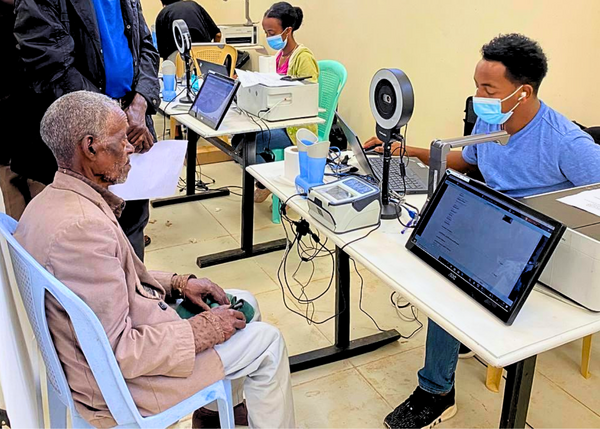
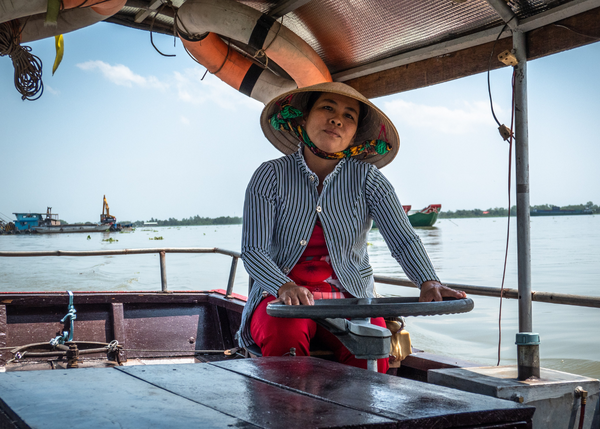
A few weeks ago, the government of a West African country announced that it was banning not-for-profit and humanitarian organisations from using images that depict beneficiaries of aid in any way that strips them of dignity. The policy seems to address photos and footage, especially taken without consent, of people in dire or destitute condition, positioned to maximise pity. It is hard to find any grounds for disagreement with this stance, given that images like this take something very fundamental away from the subject. They strip away the wholeness of what makes up identity, and reduce it to a single story of need.
This was one policy in one country's press cycle. The question of how this policy will be rolled out, monitored, enforced, and maintained may be the subject of another article, but right now, the policy itself speaks of something strong growing across the world; something we have held close to our hearts right from the start at MOSIP. That people remain at the centre of every decision we make and everything we do.
For many of us, the “eat your food, there are children starving in other parts of the world” narrative was familiar. It was the story that goodness and generosity came from guilt; laced with gratitude for one’s own life being better. It was common for humanitarian organisations to capture the child walking into the landscape with an empty plate in hand, the long arduous queue in the scorching heat, the volunteer smiling with a crowd of grateful locals. It is possible that these images were effective through sympathy. But that isn’t the same as solidarity, and the pity-narrative has consequences. It says something about agency. About who acts and who is acted upon. And perhaps most importantly, how people come to see themselves represented by the institutions meant to serve them.

MOSIP set out to build something that offered countries the ability to craft, build, run, and own the most fundamental of public infrastructure. We do not offer anything more than the most basic access and equity that every resident should be able to count on by default, confident that it was built with them in mind.
Therefore, deciding how to talk about our work meant asking honest questions about how to authentically depict the people our technology was ultimately for.
Our country partners, and the individuals deploying MOSIP technology on ground, are our guides, our check posts, and our biggest advocates. Through the relationships we have forged with them over the years, we have learnt about their lives; their languages, their cultures – the threads that weave their landscapes and their social fabrics. And through the work we have done together, we have found them to be ancient, layered, self-governing cultures – not someone else’s rescue narrative.
We were fairly deliberate about it: no images of strife. A conscious effort to study and understand colour, texture, history, landscapes, and the markers of diversity within each nation. And strong, forward-focused gazes, with expressions of confidence, pride, and joy. It was easy enough to be introspective about it – every one of us had, at some point or the other, found ourselves represented in unfavourable ways in someone else’s communications. We know, viscerally, what it feels like when a photograph does more to distort a place than to describe it. That memory made us more careful in ensuring we were doing everything we could not to do that to someone else.
At one of our annual conferences a few years ago, MOSIP designed a series of illustrated badges as giveaways. We knew we would be in a space that brought together representatives of over 50 countries and we wanted to find a way to start conversations. We produced 8 carefully crafted illustrations and mixed them up in a bowl at our booth space. Did people come to speak with us only for those little pieces of art? Of course not. But amidst the hardcore technical conversations, the demonstrations of all that MOSIP technology has to offer, and the breaking down of features and details, people did pick them up. They chose illustrations closest to who they themselves were, sometimes came back to take another variant or two, and exchanged notes about our varied cultures.
There's a practical truth underneath all of this: people notice how they're represented, especially by an institution that claims to be building with and for them. A community shown as capable, complex, and dignified engages differently than one shown as an object of charity. Respect, it turns out, is not just an ethical baseline – it's good communication.
While no one is claiming that critical decisions are made about a country’s infrastructure as a result of beautiful illustrations, we do hope that the fact that we are thoughtful about the way we represent our closest partners will, over time, add to why they trust us.
The aforementioned country’s move isn't happening in isolation. When we work with countries across Asia, Africa, and Latin America, we notice a growing insistence on real agency, authentic representation, and a desire to invest in a future that is locally-owned. Whether through capacity-building, engaging with young developers who will contribute to solution-building, investing in multi-lingual support, co-creation by countries, countries offering their biggest lessons to each other, and experts occupying their rightful seats at decision-making tables, it is clear that countries are serious about taking their futures into their own hands.
It is that shift that is genuinely empowering. It suggests that a nation’s future will be built from within.
We don't claim to have made every choice right, and we are, and likely will always be, refining our own approach. But we are proud to be part of a moment in time where dignity in representation is becoming an expectation rather than an aspiration. And where honest questions will be asked and answered about what “empowerment” really means.